Published June 27, 2026
The Great AI Duplication Trap: Are We Really Building the Future?
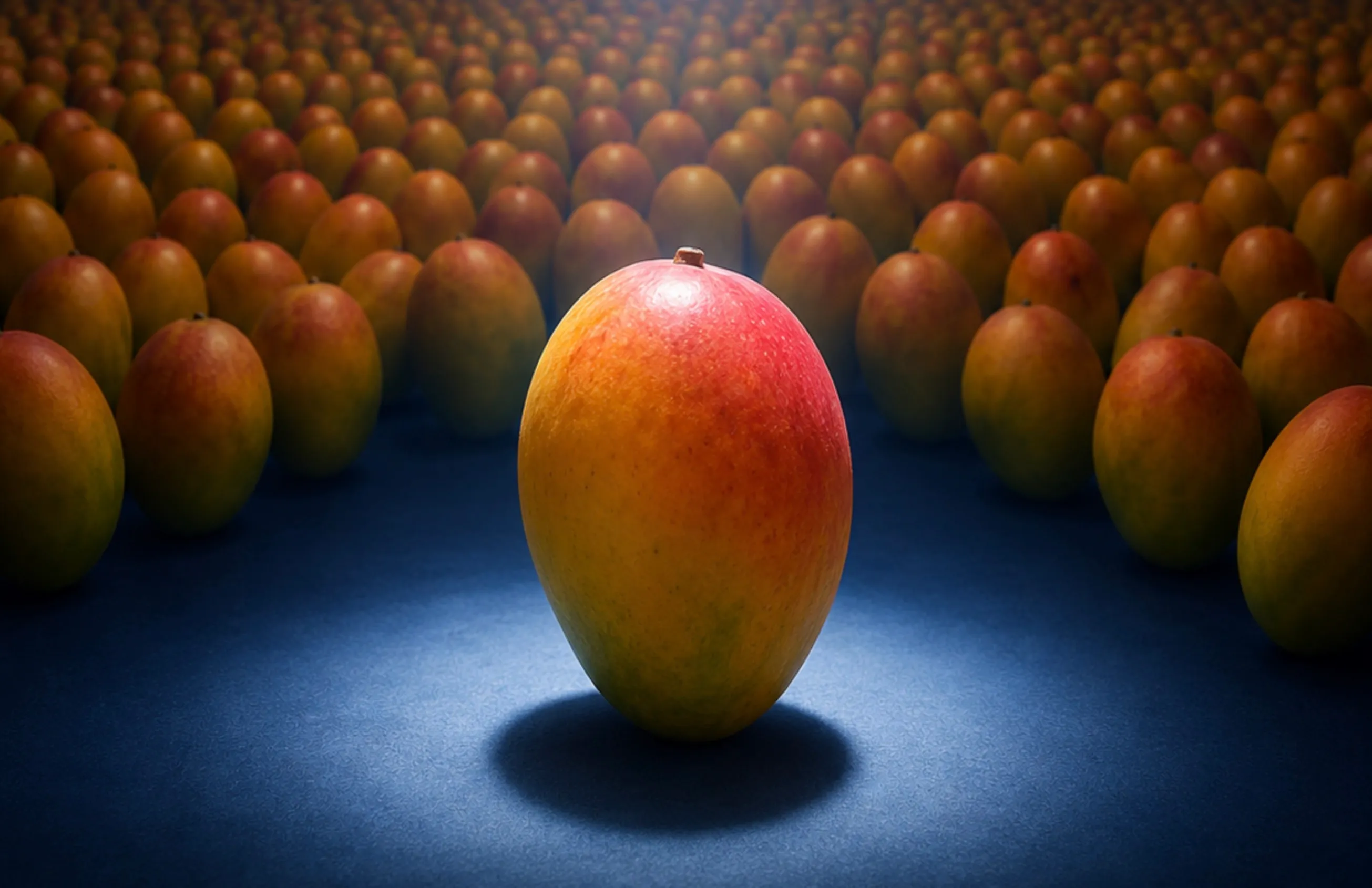
Or Funding a Mango Flavoured Future
For the past year, the AI industry has celebrated a future where every individual can become a software developer. Prompt a model, generate an app, deploy it, repeat.
It's an extraordinary technical achievement.
But it raises an uncomfortable question.
Is humanity really becoming more productive, or are we simply recreating the same software millions of times over?
The Hidden Cost Nobody Talks About
Every day, thousands, perhaps millions, of people ask an AI to build another CRM.
Another project management tool.
Another booking system.
Another invoicing platform.
Another CMS.
Another customer portal.
Most solve problems that have already been solved, refined and commercialised many times before.
Each request consumes GPU cycles.
Each iteration burns electricity.
Each prompt consumes tokens.
Each deployment creates another codebase that must be maintained.
The result is an astonishing amount of duplicated computation.
In a world increasingly conscious of sustainability, AI has unintentionally created an incentive to rebuild software instead of using mature, proven platforms that already exist.
Reinventing the Wheel Has Never Been More Expensive
Before generative AI, building software required enough effort that businesses asked a sensible question first.
"Does something already exist that solves this problem?"
Today the question has become:
"Can AI build me one anyway?"
Technically, yes.
Economically?
That's another matter entirely.
When millions of people independently recreate applications that already exist, society isn't creating millions of new ideas.
It's paying millions of times to rediscover the same ones.
The Uncomfortable IP Question
There's another issue the AI industry seems remarkably reluctant to discuss.
Every frontier model has learned from an extraordinary body of existing software, documentation, interfaces and digital products.
Behind every successful platform were founders, developers, agencies and software companies who spent years, often decades, solving genuinely difficult problems. They invested millions of dollars, employed talented people, made mistakes, persevered and eventually cracked the code.
Today, someone can type a few prompts asking for "something like..." and receive an application that reproduces much of the functionality those pioneers spent years perfecting.
Whether any individual output infringes copyright is something courts around the world continue to debate.
But the commercial reality is harder to ignore.
The accumulated ingenuity of software pioneers has become part of the capability these models draw upon every day.
Their innovations are effectively being used to inspire similar applications, over and over again, millions of times a day.
If you were one of the companies that invested years building a category-defining product, it's reasonable to ask whether the value you created is being diluted without your participation in the upside.
Follow the Tokens
Every prompt costs tokens.
Every regenerated screen costs tokens.
Every "one more tweak" costs tokens.
Every bug fix costs more tokens.
Every abandoned side project still costs tokens.
Regardless of whether the application ever reaches production, someone profits from every interaction.
This isn't necessarily sinister. Running frontier AI infrastructure is enormously expensive, and providers deserve to be paid for the services they offer.
But commercial incentives matter.
The more people choose to recreate existing software rather than subscribe to mature products, the greater the demand for compute.
More prompts.
More inference.
More GPUs.
More token consumption.
More revenue.
It's worth asking whether the industry's incentives naturally encourage endless rebuilding instead of encouraging the adoption of software that already solves the problem.
The Great Transfer of Value
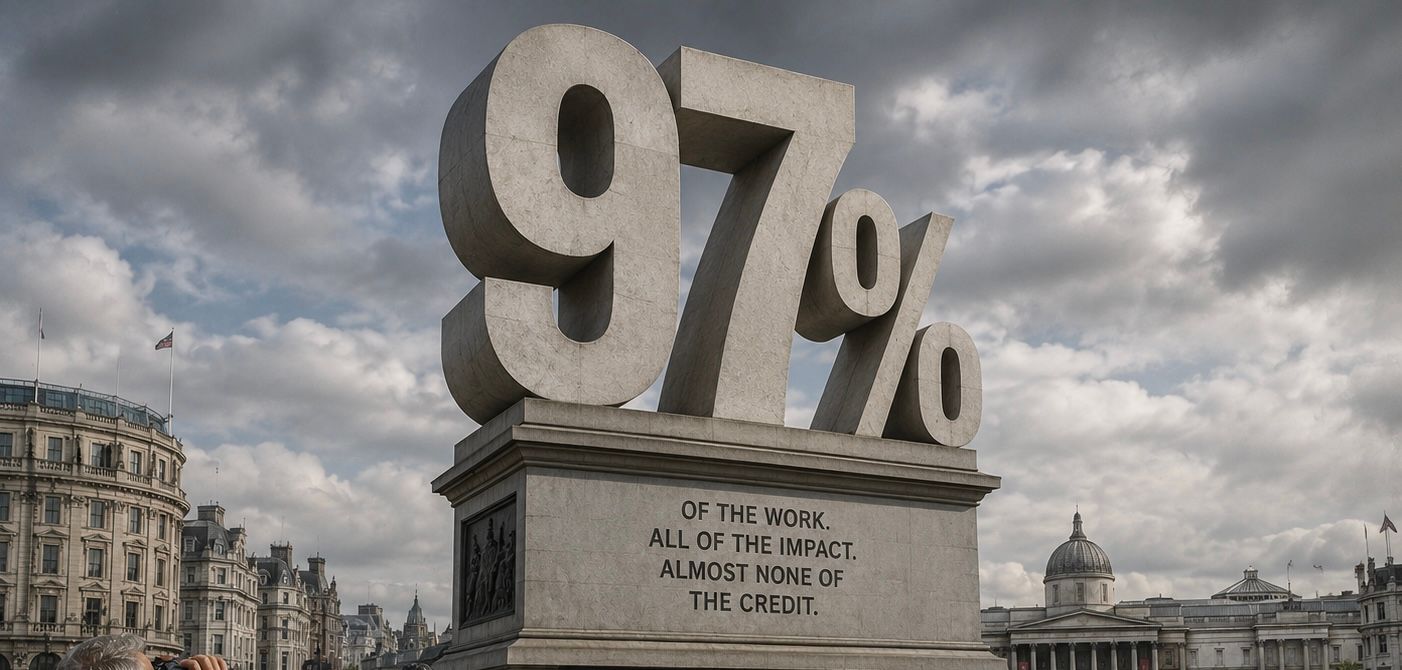
The pioneers bore the cost of innovation.
The AI models learned from the existence of those innovations.
Millions of users now recreate similar products.
The model providers earn revenue from every prompt.
Meanwhile, the original innovators receive nothing each time their years of hard-earned expertise help inspire another AI-generated equivalent.
Whether you describe that as technological progress, fair competition or an unintended consequence of modern AI, the direction of value is difficult to ignore.
The companies that solved the original problems aren't necessarily the ones profiting from their repeated recreation.
Increasingly, the largest beneficiaries are the owners of the models themselves.
The Magnificent AI Overlords, or as we'll affectionately call them, the MANGOs.
Every prompt.
Every regeneration.
Every duplicate app.
Every token.
Ka-ching.
Innovation or Commoditisation?
Most businesses don't gain competitive advantage from writing their own accounting software.
Or payroll.
Or CRM.
Or content management systems.
They subscribe to mature platforms because decades of engineering have already solved those challenges.
Yet AI risks convincing organisations that rebuilding commodity software is somehow innovation.
It often isn't.
Innovation isn't creating the ten millionth project management app.
Innovation is solving problems nobody has solved before.
The Sustainability Question
The environmental discussion around AI usually focuses on training frontier models.
Far less attention is given to inference.
Yet inference happens every second of every day at astonishing scale.
Millions of users repeatedly generating similar applications may collectively consume vastly more energy and computing resources than simply adopting software that already exists.
The irony is difficult to ignore.
AI promises efficiency while simultaneously encouraging unprecedented duplication.
The Better Model
AI is at its best when it amplifies existing capability rather than endlessly recreating existing products.
Imagine instead:
A mature platform.
A proven architecture.
Shared security.
Shared compliance.
Shared infrastructure.
Shared optimisation.
Then AI personalises, automates and extends that platform for every business.
Instead of rebuilding the foundations every time, AI focuses on what actually differentiates organisations.
That's where genuine productivity begins.
Actual Intelligence
At Blutui, we believe the future isn't millions of near-identical applications burning through trillions of tokens.
It's intelligent platforms that adapt without constantly rebuilding themselves from scratch.
The smartest AI may not be the one that writes the most code.
It may be the one that knows when not to.
Because perhaps the biggest question facing our industry isn't whether AI can build everything.
It's whether endlessly rebuilding what already exists is good for innovation, good for sustainability, or simply very good for the MANGOs.
More from Articles





















![400% [Put in context for agency founders]](https://cdn.blutui.com/uploads/curation/img-8327.jpeg)



Sign up for our newsletter.
We partner with some extraordinary organisations