Published January 26, 2026
Is Leadership Weakening in the Modern C-Suite Workforce?
January ‘26 Founders’ Circle Summary

Topic: Is leadership weakening in the modern C-suite workforce?
Provocation: Ian Wright, FamilyComms
Session Prompt: Paula Grunfeld, Bunny Creative
Leadership in the Modern C-Suite: Weakening or Rebalancing?
At the January 2026 Founders’ Circle session, prompted by Ian Wright’s provocation that leadership styles are weakening in the modern C-suite workforce, members engaged in a robust discussion grounded in lived executive experience across regions and industries.
The group reached strong alignment around a central conclusion: leadership is not weakening. It is undergoing a fundamental rebalancing.
What can appear as reduced authority or less command-and-control behaviour is, in reality, a response to a more complex and exposed operating environment shaped by accelerating market pressure, technological disruption, heightened performance scrutiny, and evolving workforce expectations.
Leadership Is Becoming More Human, and More Exposed
A consistent theme across the discussion was the growing importance of emotional and relational capability at the executive level.
Self-awareness, empathy, and resilience are no longer optional or “soft” traits. They are essential to sustaining performance, motivating teams, and navigating uncertainty. Leaders today operate under intense short-term financial imperatives, shareholder expectations, competitive dynamics, and public visibility. There is far less room for error than in previous eras.
This creates a paradox. Leadership can feel more fragile because leaders are more exposed. Yet the demands placed on them are more sophisticated than ever before.
Balance Trumps Bravado
Participants converged on the idea that effective leadership today requires balance rather than dominance.
Empathy must coexist with accountability.
Trust must coexist with performance expectations.
Vision must be matched by disciplined execution.
Leadership credibility increasingly derives from the ability to integrate opposing forces, often described as balancing the visionary with the integrator. Positional authority carries less weight on its own. Alignment of people, purpose, and outcomes now defines leadership strength.
Cas Majid, CEO of WOW Group, shared that micro-managing senior leaders had never produced results. His approach has evolved toward listening, asking questions, and staying curious. By allowing his leadership team to articulate their own challenges and solutions, he both empowers them and deepens his understanding of the business. Authority is present, but exercised through inquiry rather than control.
Cultural and Generational Dynamics
Marlina Lim highlighted a regional leadership challenge in Jakarta, where there is limited real-world exposure for aspiring leaders. The available talent pool can lack the depth of practical experience required at senior levels. This raises questions about how leadership capability is developed in emerging markets and how organisations intentionally build experiential depth.
Daniel Eischen introduced the generational lens. He observed that many millennial and Gen Z employees are less willing to endure misaligned environments. Cultural affinity, financial reward, and role clarity matter deeply. Unlike Gen X leaders who often internalised grit and endurance as default expectations, younger professionals are more selective about where they commit their energy.
This shift can be misinterpreted as entitlement. The group recognised instead that it reflects broader societal change. Leaders must now inspire alignment rather than assume compliance.
Leadership Emergence: Found, Not Forced
The discussion moved toward how leaders are identified and developed.
There was broad agreement on several principles:
Great leaders are often identified by others, not self-appointed.
Leadership potential frequently exists in people who do not yet see themselves as leaders.
Talent does not automatically gravitate toward leadership. Great leaders actively identify and develop talent.
Rakz Mathur reflected on early leadership lessons learned while working with Amir Mireskandari. Their relationship included camaraderie outside the office, which offered insight into Amir’s character. However, once inside the business environment, personal rapport was set aside. Performance, negotiation, and outcomes were separated from friendship. The lesson was clear: leadership requires maturity to distinguish personal connection from professional accountability.
Graeme Blake offered a practical example. Over two years, Tyler Burbage demonstrated initiative and consistent leadership behaviours within the business. A shared sales trip from New Zealand to London provided additional clarity. Observing Tyler in varied environments confirmed readiness for expanded responsibility, including the potential to establish a UK beachhead on his own initiative. His background in professional cycling, with its discipline and resilience, may have contributed significantly to his leadership mindset. Importantly, Tyler did not formally position himself as a leader. His actions revealed it.
This reframes succession away from rigid planning and toward intentional identification, mentoring, and sponsorship grounded in performance, attitude, and values.
A Shift in Problem Solving: WHO, Not HOW
Another evolution in leadership thinking emerged clearly.
The defining question has shifted from “How do I solve this?” to “Who can help solve this?”
Modern leadership is less about individual heroics and more about collective leverage. It requires network awareness, capability mapping, humility, and the confidence to distribute ownership. The strongest leaders increasingly act as orchestrators rather than solo performers.
Points of Tension: Promotion, Potential, and Pressure
While philosophical alignment was strong, practical tensions remain:
Promotion decisions: balancing internal loyalty against external impact capability
Development risk: investing in leaders who may leave versus the greater risk of not investing
Short-term commercial pressure: managing immediate performance demands while building long-term leadership depth
There was recognition that most organisations have experienced both significant leadership wins and costly misjudgements. Common causes include promoting too quickly, hiring in one’s own image, or favouring familiarity over future-fit capability.
Defining Leadership Success Today
Ultimately, the group agreed that leadership is measured more by outcomes, and less by style.
Regardless of tone, personality, or generational profile, leadership effectiveness is determined by:
Sustainable business performance
Cohesive, motivated teams
Long-term organisational health
Leadership style alone is neither strength nor weakness. Results define legitimacy.
Group Conclusion
Leadership in the modern C-suite is not weakening. It is shedding outdated signals of dictator style ‘brute strength’ and replacing them with a more demanding, nuanced, and human model.
Authority without empathy is insufficient. Empathy without accountability is ineffective. The modern leader must manage complexity and exposure, balance competing forces, and deliver measurable outcomes simultaneously.
While leadership styles may appear less rigid than in previous generations, this reflects broader societal change rather than erosion of capability. Success is defined not by volume, dominance, or bravado, but by sustained business performance, team cohesion, and durable growth across personal, professional, and enterprise dimensions.
The consensus was clear: leadership is not diminishing. It is evolving.
Thank you for participating in the Blutui Founders’ Circle discussions. We look forward to hosting the next session in February. Date to be confirmed.
Warm regards
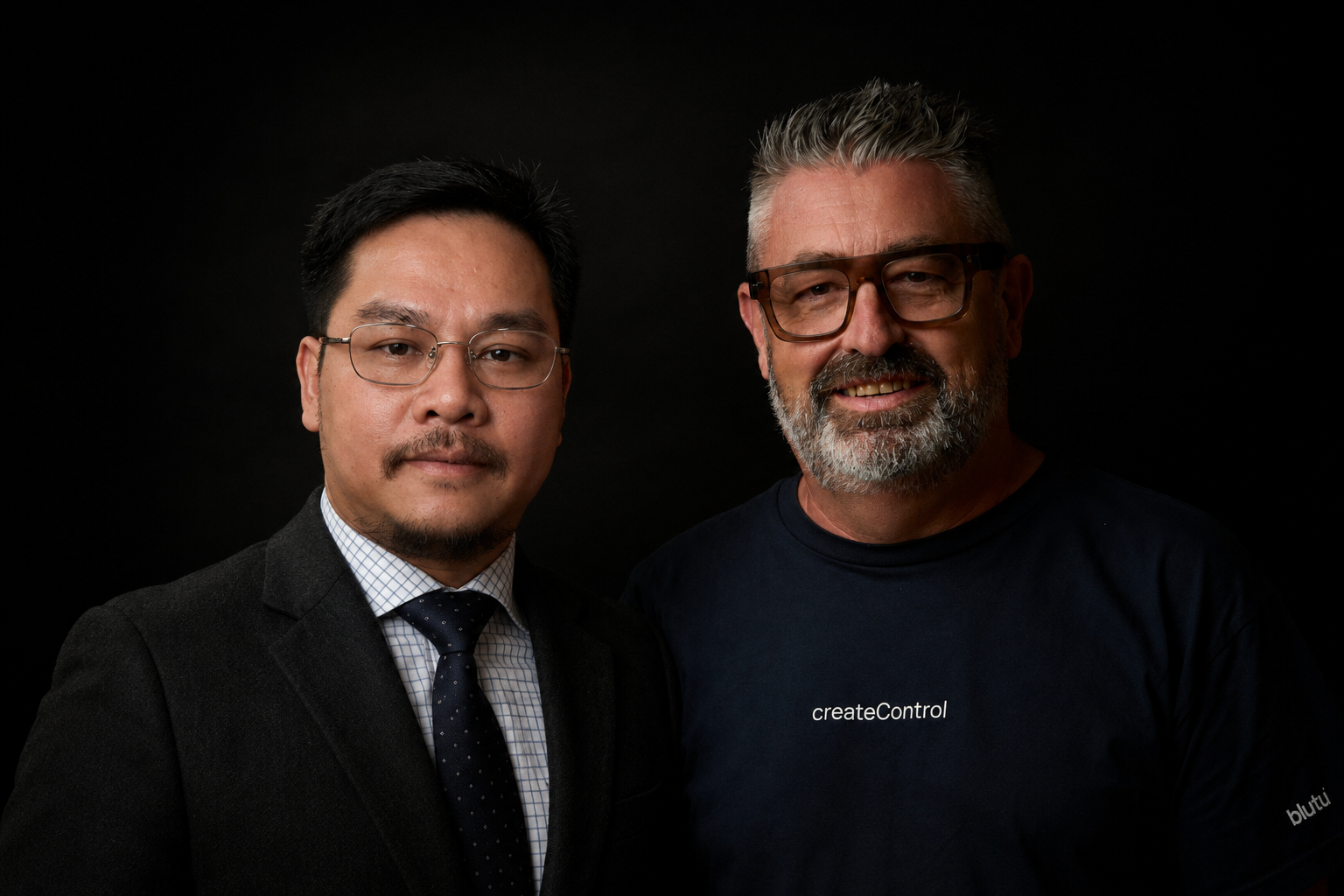
Graeme & Amir
More from Articles


















![400% [Put in context for agency founders]](https://cdn.blutui.com/uploads/curation/img-8327.jpeg)



Sign up for our newsletter.
We partner with some extraordinary organisations