Transform #16 Article
Hot Wax, Fire, Proof of Life
Advertising Needs More Punks, Fewer Guardrails
Industry 4 min read
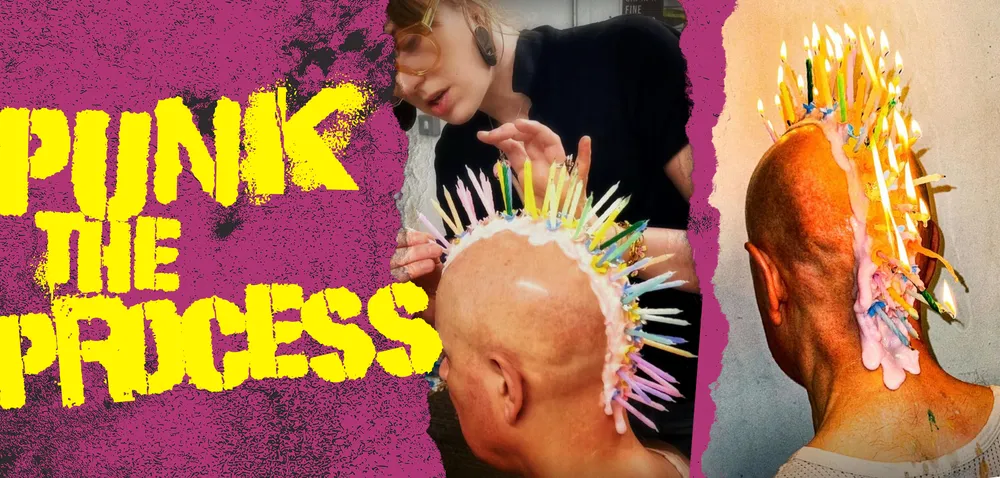
A bald man in his late 60s.
(There, I said it. Can we say that? Is that ageist? Are we still allowed to say bald?)
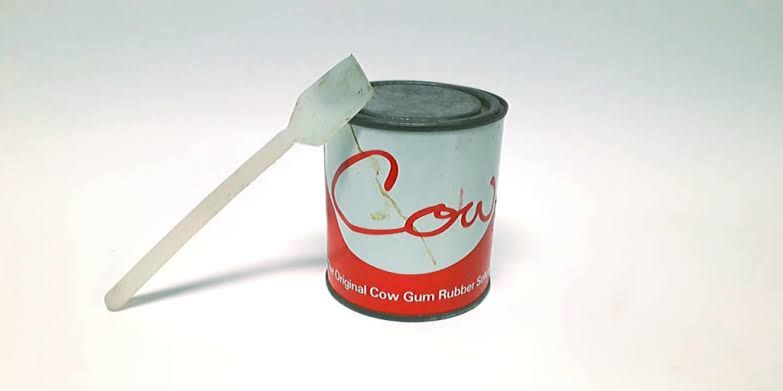
On his glorious dome sits a full Mohawk, fixed in place with glue, possibly Cow Gum™ left over from the paste-up era, highly flammable so don’t try this at home kids, or anyone for that matter.
A Mohawk made entirely of birthday candles.
Fifty of them.
Blazing.
Wax runs down the gent’s scalp in molten streaks of vibrant colour. It’s arresting. A little dangerous. Slightly unhinged. Genuinely beautiful.
You don’t need it explained. You feel it.
Heat.
For me personally, this image captures something advertising is at risk of losing as everything becomes increasingly digital, automated and endlessly optimised. It’s a reminder that creativity hits hardest when it’s physical, risky and unmistakably human.
It’s also what happens when creativity isn’t over-protected.
When it isn’t boxed in by brand-safety checklists, optimisation frameworks or pre-approved templates.
The candle Mohawk only exists because no one stepped in to say, “maybe don’t.”
Making Some Things Means Something
Analogue creativity is messy.
It smells like wax, Cow Gum™ and burnt wick. It burns your fingers, it burns your nostrils. It leaves marks, mistakes and happy accidents.
And those marks are what matter.
Analogue creativity survives because it has no guardrails. Or rather, the only guardrail is consequence. If you mess up, you feel it. If it works, you really feel that too.
That kind of freedom is uncomfortable. Inefficient. Impossible to endlessly A/B test.
But it’s also where originality comes from.
For most of human history, we’ve trusted marks as proof of origin. A signature on a canvas. Brushstrokes you can almost trace with your eyes. Fingerprints pressed into clay. Imperfections that whisper: a person was here.
Now, work so often arrives frictionless and flawless. It functions. It performs. But it leaves no trace of who made it. Efficient? Yes. Memorable? So often, sadly no.
Maybe that’s the gap we’re starting to feel.
A human mark doesn’t need to be a literal signature. It can be wax dripping unpredictably. A torn edge. A wobble in the type. Something that refuses perfect repetition. Something that proves persistence, perseverance and presence.
In advertising, those marks become proof of provenance, not legally, but emotionally. They tell the audience someone cared enough to choose, to risk, to keep trying until it finally worked and to stand behind the work.
50 Years of Punk and the Value of Evidence
That idea sits at the heart of 50 Years of Punk, the exhibition celebrating half a century of punk’s cultural impact.
Punk was never about polish.
It was about evidence.
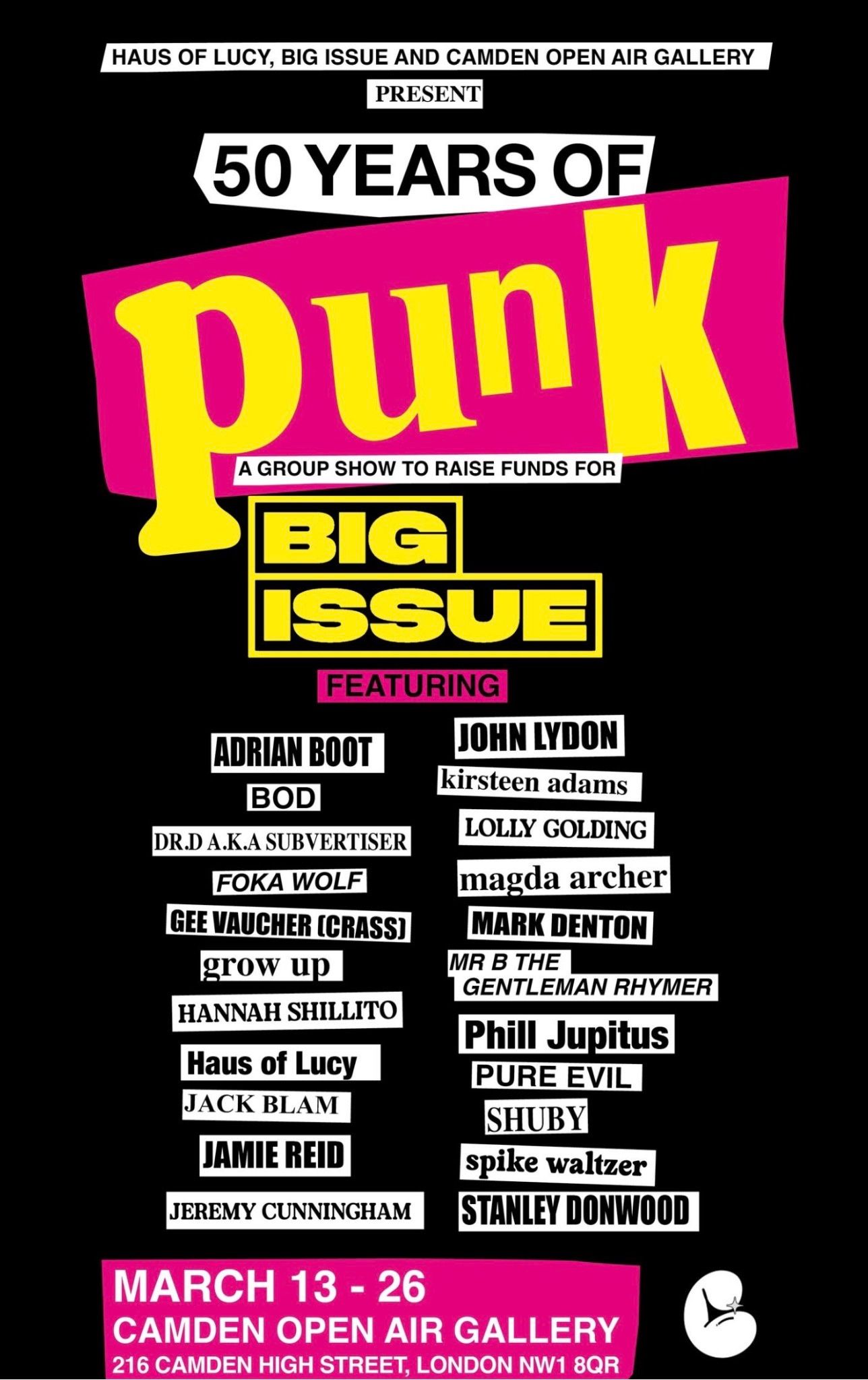
Poster Design: Mark Denton
Safety pins. Xerox’d flyers. Ripped ransom-note posters. Hand-scrawled lyrics. These weren’t aesthetic choices. They were proof. Proof that real people made this, with limited means and a lot to say.
And crucially, punk wasn’t about permission.
It didn’t ask whether something was allowed. It asked whether it was felt.
That’s what happens when there are no guardrails, only intent, urgency and belief.
Mark Denton of Coy! fame, and long-time creative partner Saskia Rothstein-Longaretti, embody that same spirit in their contribution to the show. Playful, bold, unmistakably hands-on. You can see the making in the work.
The candle Mohawk lands because you instantly understand it happened in real space and real time. Someone lit those candles, fine finger hairs singed. Someone stood still and accepted the risk while wax ran.
That knowledge enhances the image.
It makes it sharper. More alive.
Mark Denton, Advertising, and the Punk Mindset
Turning 70 this year and celebrating 50 years in the agency game, Mark Denton began his advertising career in 1975, right as punk tore through music, fashion and art. The influence never left him.
He often talks about a time when advertising felt like street-level entertainment. Big posters. Big ideas. Work that demanded attention instead of politely asking for it.
Creativity was visible, physical and confident. It valued experimentation, craft and creative partnerships. Ideas were meant to be felt, not endlessly explained.
His work still resists the clean, invisible feel of much modern output. It carries a human watermark.
Not as nostalgia, but as intent.
Punk Roots at Blutui
That intent resonates deeply with Graeme Blake, CEO of Blutui.
Graeme is a child of the ’70s, with punk shaping his early years. It left a mark. Punk taught a generation that you didn’t need permission, polish or perfection to make something powerful. You needed conviction.
Those values still shape how creativity is approached at Blutui today.
At Blutui, creativity isn’t about rejecting technology. We’re a technology platform that projects human endeavour. It’s about refusing to let technology become the guardrail.
The platform exists to remove friction, not imagination. To automate the boring bits, not neutralise the brave ones.
Blutui doesn’t tell you what to make, how to make it, or when to stop. It assumes that if you care enough to try something risky, that risk is the point.
Ideas should have teeth. They should feel alive. They should show signs of being lived in, not sanded down by process.
Why This Matters Now
As tools get smarter and outputs made easier, the value of proof increases.
When anything can be made, what matters is who made it, and how.
Analogue creativity offers that proof. It leaves evidence. It carries presence. It says: this wasn’t generated. It was made, from lived experience.
The candle Mohawk burns bright because no one put guardrails around it.
No one optimised it.
No one smoothed the edges.
No one asked whether it would scale.
Someone simply decided it needed to exist.
That’s the same instinct punk ran on fifty years ago. And it’s the instinct great advertising still needs if it wants to matter.
Blutui exists to protect that instinct.
Not by romanticising the past or rejecting the future, but by making space for work that carries proof of life. Proof of choice. Proof of risk.
Because when anything can be generated, the only thing that truly cuts through is evidence that someone was there, for that wonderful moment when it all came together.
Wax dripping.
Fingers burned.
No guardrails.
Conviction.
Written by: Graeme Blake
Contributors without whom this post would be boring as batshit: Mark Denton, Saskia Rothstein-Longaretti. Model: Mark Denton. Photo credit: Herbert Fountaine
Give it a follow on IG:https://www.instagram.com/p/DT6KezOjEne/
More from Transform #16
-
News 1 min read
London’s CallingBlutui Senior Engineer Tyler Burbage makes the Leap to London
-
Events 1 min read
And the Envelope Please2026 Best Digital Agency Award Sponsorship
-
Product 2 min read
Built by Adland. Engineered for Martech. Proven by Pounce.In Service of Adland, an Agency-First Approach to AWE
-
News 1 min read
The Kat Came BackBig Move for Blutui Appointing Head of Commercial Ops
-

Product 2 min read
Blutui MCP Gets Mad SkillsIntroducing Blutui Context
-
Product 3 min read
Yes, Blutui is a CMS.It's also the only Agency Web Ecosystem.
-
Product 3 min read
When the Vibe Coding High Wears OffWhy AI in Web Development Needs a Platform