Transform Article
Who Turned Off the Summer Internship?
Red tape and risk are closing adland's oldest open door, right when AI makes fresh talent worth more than ever. Article by Graeme Blake, Founder & CEO, Blutui
Industry 7 min read
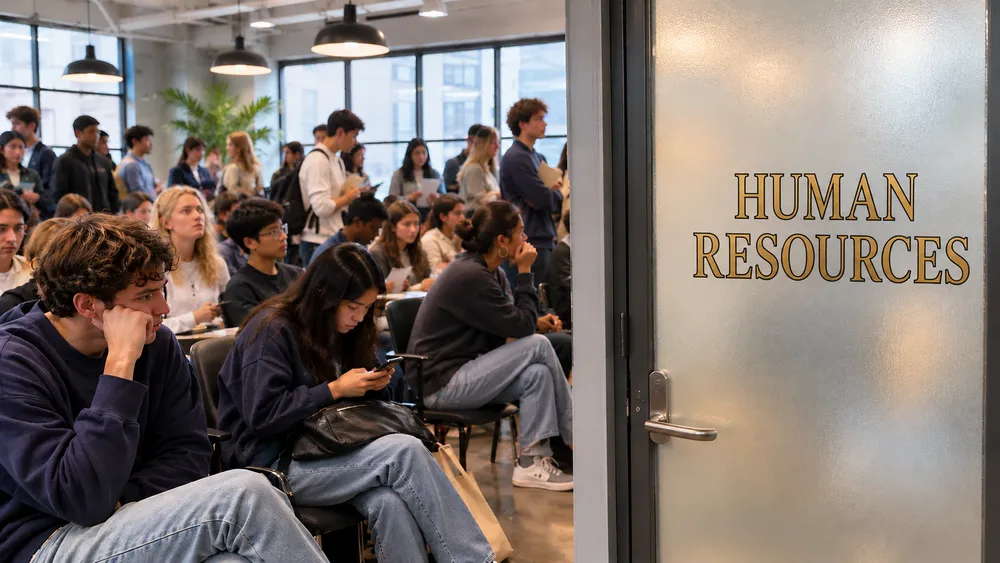
Most of us in adland got our start because someone said yes. A bright kid with a scrappy portfolio blags their way into a studio for the summer, makes the tea (badly), sits in on a pitch and walks out with a reference and a reason to keep going, or maybe gets offered a junior role. That was the summer internship. Adland's open door.
Thirty-odd years in, I'm watching that door close. Not with a slam, but a slow drip of cold water over what used to be a hot entry point. Red tape, regulation and risk, poured over a tradition that built most of the careers in our industry. Mine included.
The numbers tell the story. The Institute of Student Employers found applications for internships jumped 27% in 2025-26 while employers cut the number of places on offer. Demand up, supply down. That's not a vibrant marketplace. That's an industry bottleneck.
Death by a thousand compliance checks
Let me be clear on one thing up front. Unpaid internships deserved scrutiny. If an intern is doing real work, the law says they're a worker and must be paid at least the minimum wage, and in the UK HMRC names and shames those who don't. Fair enough. Talent shouldn't depend on whose parents can bankroll a summer in London or Edinburgh. But somewhere along the way the fix became the fence, and plenty of great agencies have simply stopped trying to climb it.
Here's what a small agency now weighs up before saying yes to students for the summer:
The Employment Rights Act 2025, rolling out across 2026 and 2027, which brings more rights in earlier and more risk with them. Nearly a fifth of small businesses in one survey said the new laws significantly discourage them from hiring.
Higher employer National Insurance and a rising wage floor, so a short placement now carries close to the full cost of a junior hire.
A government that dropped its promised ban on unpaid internships in favour of guidance and tougher enforcement, with a new Fair Work Agency able to investigate. Clarity traded for uncertainty.
Onboarding, IT access, data protection, safeguarding, insurance and adult supervision. Each one sensible. Together, a wall of admin for an eight-week stint.
None of these is unreasonable on its own. Stack them on a 20-person studio already squeezed on fees, though, and the easy answer becomes "sorry, not this year". Multiply that across the industry and you get the talent drought we're living through now.
Hundreds of applicants, three seats
So here’s the thing, the appetite hasn't gone anywhere. If anything, it's sharper than ever.
Barry Fearn, CEO of Lane Group, a leading Edinburgh creative and media agency, tells me they run the Inside Lane programme. Not a few, not dozens, but hundreds of applicants for three intern positions in their last intake. So many keen, industrious, hopeful people chasing every seat.
Barry sent me a short reel featuring a couple of the Inside Laners. Well worth a watch.
Hats off to Lane for keeping the door open when plenty of others have quietly pulled theirs shut. But I keep thinking about all the others who missed out. Talented, motivated humans who wanted in and now go looking elsewhere. Or don't. Some will land in tech, some in consultancy, many will drift out of the creative world altogether. Every one of them is a writer, designer, strategist or founder that our industry may never have the pleasure of meeting, may never experience the benefit of their sharp minds propelling our industry forward.
What we lose when the door shuts
Here's the cruel twist. Entry-level jobs now expect experience. More than a third of advertised entry-level roles in the UK list prior experience as essential. Fewer internships means fewer people who can tick that box. Fewer juniors. A thinner bench of mid-weight talent five years from now. You can see where that ends up.
AI gets a lot of the blame for that squeeze, and of course it plays a part. But AI can't sit in a client meeting and catch the yawn, the eye-roll, read the room. It can't learn when to push back on a brief, or how to take a sledge from a creative director without crumbling. You learn that stuff by being there. Craft is learned in the room.
What worries me more is the lesson some agency owners have taken from AI. It's frozen plenty of them into thinking efficiency means jumbo cuts. Fewer juniors, fewer interns, smaller teams. That's the wrong read. Used well, AI is a force multiplier. It lets an agency grow, take on more and steal the march on slower competitors. But a multiplier needs something to multiply. You need creative and strategic marketing minds coming through the ranks for AI to amplify, not replace altogether. Cut off the pipeline and there's nothing left to scale.
So what can we do about it? A few thoughts:
Pay interns properly and say so loudly. It's the law, and it widens the pool.
Share the load. Smaller studios could co-host interns, rotating them across two or three shops with one shared contract and one set of paperwork.
Lean on the bodies built for this. Industry associations and networks can hold template agreements, insurance and onboarding kits so each agency isn't reinventing the wheel.
Ask government for a proportionate track. A simple, short-term internship framework with clear rules would remove the fear without removing the protections.
Start earlier: taking agencies into schools
Fixing internships is one job. The other is meeting talent before they ever apply for one. That's why I'm proud Blutui is partnering with BIMA on Digital Day, an initiative to spark interest in the digital agency career paths open to school leavers. More than 100 BIMA agencies head into schools to show students what the work looks like, who does it and how to get in.
For plenty of school leavers, a career in a digital agency isn't even on the radar. Nobody in the family does it, and careers advice rarely mentions it. One afternoon with people who do the job can change that.
"Our industry has a talent pipeline problem, and it starts long before university," says Matt Sullivan, CEO of BIMA. "Digital Day puts real agency people in front of students who may never have considered this world. With partners like Blutui alongside us, we can open more doors for more young people, wherever they come from."
For me, this one's personal. I started out with no map into this industry. Curiosity, and a few people willing to give me a go. Agencies have always been built by people who were given a chance. If regulation makes that chance harder to offer at 21, we show up at 16 instead. Trust is earned in the real world, and so is a career. Let's go and meet the next generation where they are.
Proof that partnership works
The other end of the pipeline needs us too. For years we've worked alongside Alvin Yeo, Industry and Community Engagement Manager at the University of Waikato's School of Computing and Mathematical Sciences, and the team at the Auckland ICT Graduate School, home of the Master of Information Technology (MInfoTech) programme, sharing our time, expertise and opportunities with their students. We've had great success with our hires over the years. The summer internship programme works.
This month, as the school marks ten years, Blutui has been named a recipient of its Distinguished Industry Partnership Award. It recognises organisations that have made a significant contribution to the programme's success over the past decade. Honoured is an understatement. Appreciate it immensely.
"Industry partnerships give our students the chance to apply their learning to real-world challenges, building the confidence and connections they need to thrive after graduation," says Alvin. "Just as importantly, our partners benefit from fresh perspectives and creative thinking, making these collaborations genuinely valuable for everyone involved."
We're a small team building an ambitious Agency Web Ecosystem, not a holding company with an HR department. If we can make room for students, so can most of our industry. It takes a willing partner on each side and a bit of goodwill in the middle. And it pays back, in people, ideas and the next generation of talent.
The next step: Rising Stars
Getting young people through the door is step one. Keeping them, and growing them into leaders, is the next. That's where networks can do what a single studio can't.
I was at the Tribe Global meeting in Singapore last week, and it reminded me of one of the best next-step models around. Tribe Global, the network of independent agencies led by Greetje Demuelenaere co-chaired by David Balfour of Lightblue, and Daniel Eischen of Concept Factory runs a Rising Stars programme. Member agencies nominate their brightest emerging talent, and the chosen cohort works alongside the network's executive board on marketing, education and training priorities, even helping to run the network's own conference.
That's a seat at the table, not a seat at the back. On its own, an independent agency can't offer a young talent that kind of exposure. Together, a network can. Picture the summer intern who blags their way into a studio like Lane, then a few years on is helping steer a global network. That's a career path worth protecting, and a model more of our industry could borrow.
Over to you
The rules were written to protect young people. Understandable. But right now, too many of them are protecting young people from hope, and the opportunity of a career in a wonderfully dynamic and rewarding industry.
So I'd love to hear from you. Agency leaders, HR teams, anyone who got their start as an intern. Are you still running a summer programme? What's stopped you, or what's made it work? And if you're a student or grad trying to get a foot in the door, tell us what you're running into.
Drop your thoughts in the comments. Let's get the summer internship back.
More Transform
-

6 min read
Piracy, or Asleep at the Wheel?UK agencies are not losing web development work to cheap labour any more.
-

3 min read
Burn the O/T, Burn the TimesheetHow does an agency get paid for the outcome, when the hours no longer hold up?
-

4 min read
createControlWhy Agencies Outgrow Visual Web Builders
-
Agency Life 2 min read
Switching dog food? Go slow. Switching platforms? Same rule.What the back of the bag knows