Published July 23, 2026
Did Adland Lose its Mojo, or Spectacularly Give it Away For Zip.
An Uncomfortable Trip Down Madison Ave. Arrives at a Message of Hope.
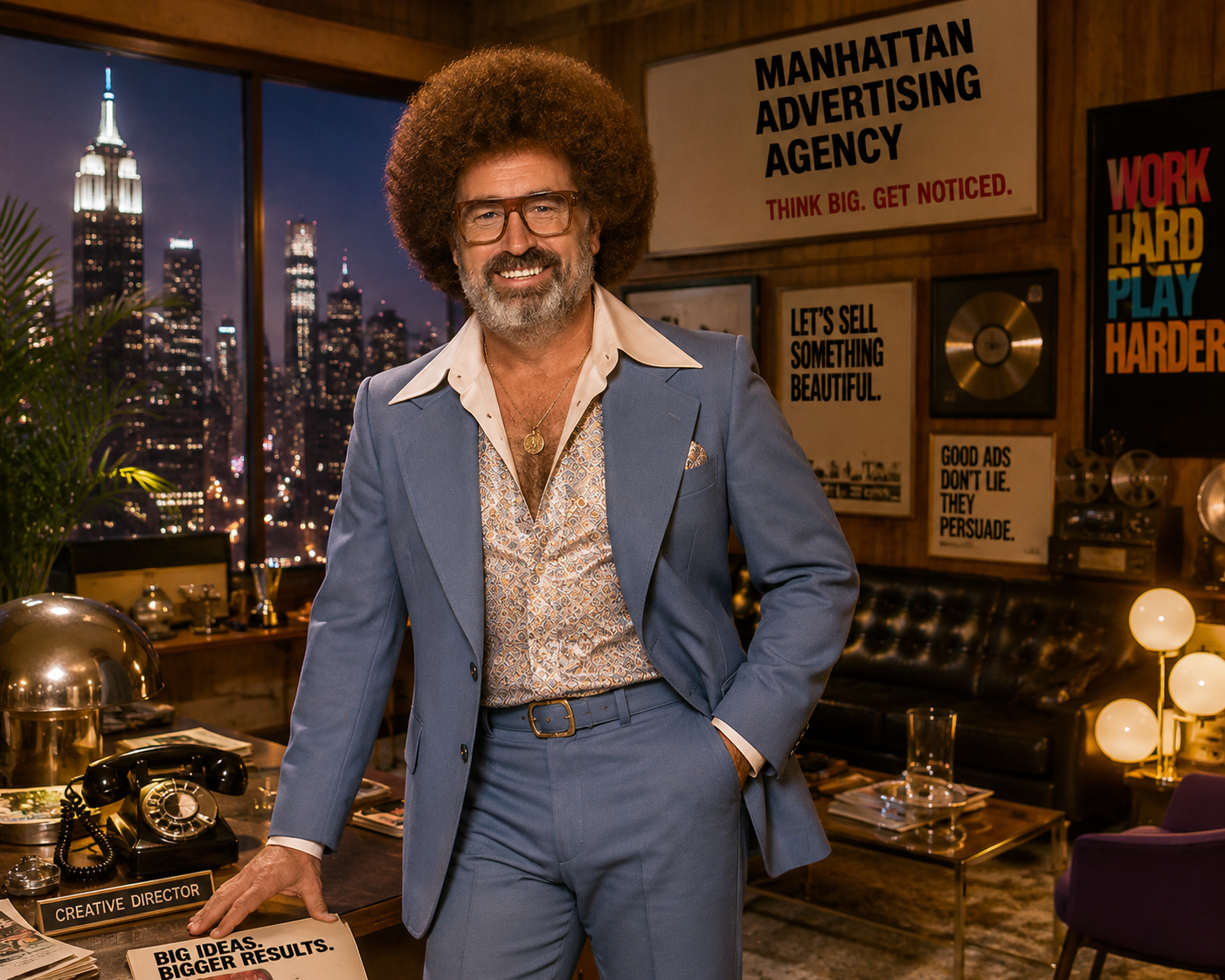
After 30 years in Adland, I have watched our industry do something both impressive and completely absurd. We became world-class at creating value for our clients while becoming increasingly poor at articulating value for ourselves, much less capable of negotiating it into our agency revenues.
Somewhere along the way, we gave away the most valuable asset we had. Not the creativity itself, because thankfully agencies still have plenty of that. What we gave away was the mandate and the ability to clearly articulate the commercial value behind it.
For decades, the HoldCos operated under a model that, ‘in the heat of the moment’ made perfect commercial sense. The industry was expanding and growing increasingly competitive. Media was the economic engine of the agency relationship. Large media accounts came with predictable revenue streams, established commission structures and deep advertiser relationships. Creative capability was the differentiator that helped win those accounts, but commercially it became absorbed into the broader proposition.
The thinking, the strategy, the ideas and the execution capability were bundled together as part of the overall relationship, underpinning the ad spend. Creative became the thing that helped secure the account, rather than being independently valued.
The challenge with markets is that they tend to remember what you spend decades teaching them. Over time, clients were taught that creative was included.
That decision had consequences.
The industry gradually turned its greatest competitive advantage into a cost of doing business. The capability that created brand preference, influenced behaviour and helped companies grow became something that was increasingly difficult to separate, measure and charge for.
Then the market changed.
Digital platforms fundamentally disrupted the traditional advertising ecosystem. Search, social, programmatic and now retail media created new relationships between brands, audiences, media owners and technology platforms. The agency was no longer the only route to market. Brands gained access to data, targeting and distribution capabilities that previously sat largely within agency-controlled ecosystems.
At the same time, Brandland emerged. Larger advertisers began building internal teams in an effort to gain greater control, improve speed and bring more capability closer to the business. In many ways, the growth of in-house agencies was a logical response to an industry model that had become increasingly complex and expensive to navigate.
The platforms, understandably, moved closer to the advertiser. They owned the audiences, the data and the technology, and there was little commercial incentive for them to preserve an intermediary role.
As recently as last year Mark Zuckerberg laid his Meta vision bare in a Stratechery interview with Ben Thompson, stating "You don't need any creative, you don't need any targeting, you don't need any measurement, except to be able to read the results that we spit out." In his personal redefinition of the ad agency industry.
The irony is that this should have been the moment when creativity became more valuable, not less.
When everyone has access to similar platforms, similar data and increasingly similar technology, differentiation comes from the ability to think differently. Ideas, strategy and creative problem solving become the things that separate brands from competitors. A favourite line that Blutui CEO Graeme Blake borrows off the animated movie, The Incredibles is where the villain Syndrome states “ villain Syndrome famously states, "And when everyone's super... no one will be."
Yet the industry had already spent decades teaching the market that creative was simply part of the package.
That is the great contradiction of modern Adland. We spend our careers helping brands communicate why they are valuable, while collectively struggling to communicate the value of our own ability to do exactly that.
This is why the conversation around value-led pricing has become so important. Caroline Johnson, Co-Founder of The Business Model Company, has consistently challenged organisations to rethink how they create, deliver and capture value. The point is not simply charging more. The point is building a business model where the value being created can actually be recognised and captured commercially.
For agencies, that requires more than a change in pricing strategy. It requires confidence in delivery.
This is where the conversation becomes uncomfortable.
Most agencies understand the theory behind value-based pricing. The difficulty is that many do not have a production model predictable enough to support it. When every digital project is effectively a custom build, every team has different processes and every estimate contains unknown variables, agencies naturally retreat to the safest commercial ground available: hours, resources and scope.
The problem is that hours are a measure of input and effort, not value.
This is the reason Blutui exists.
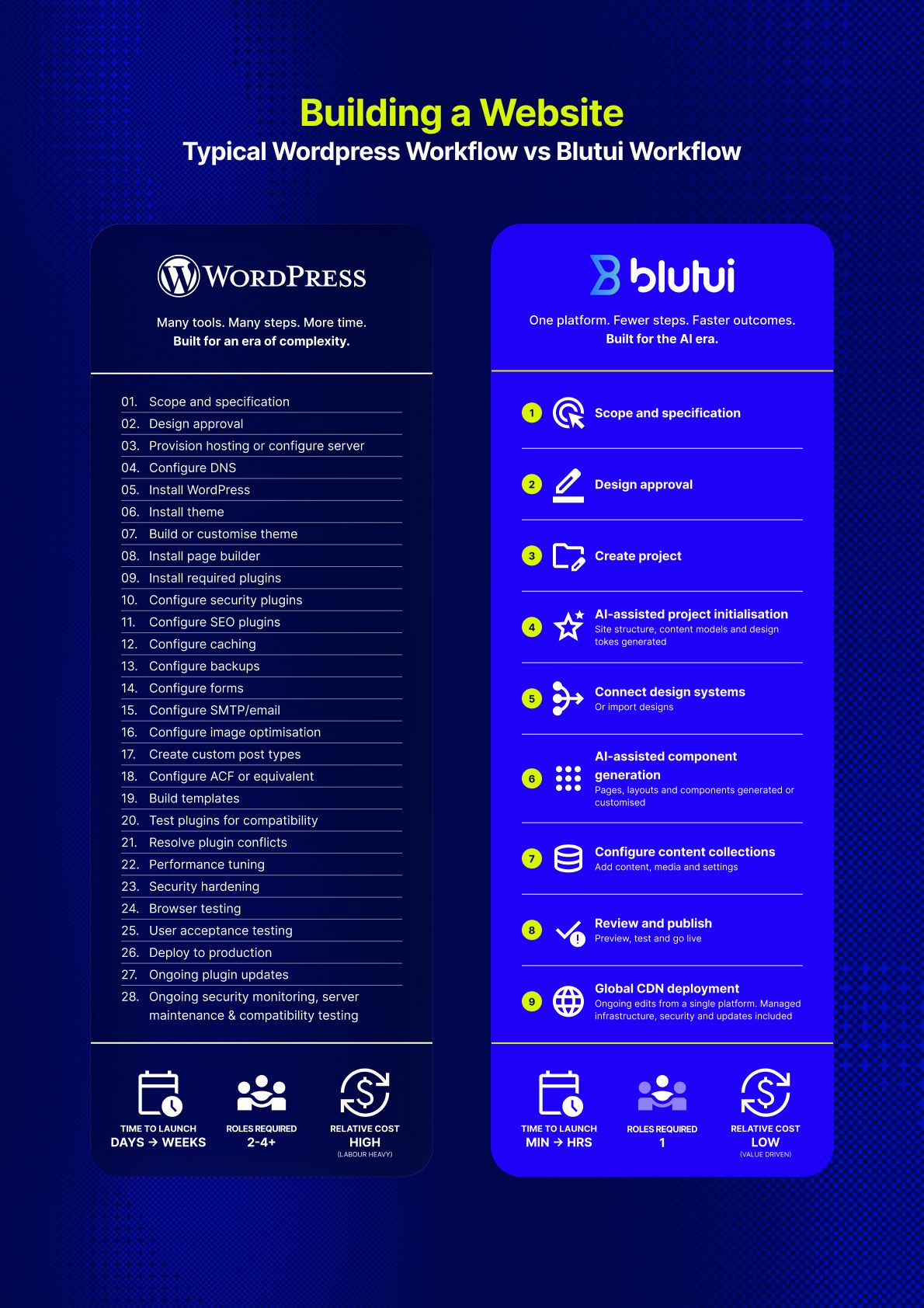
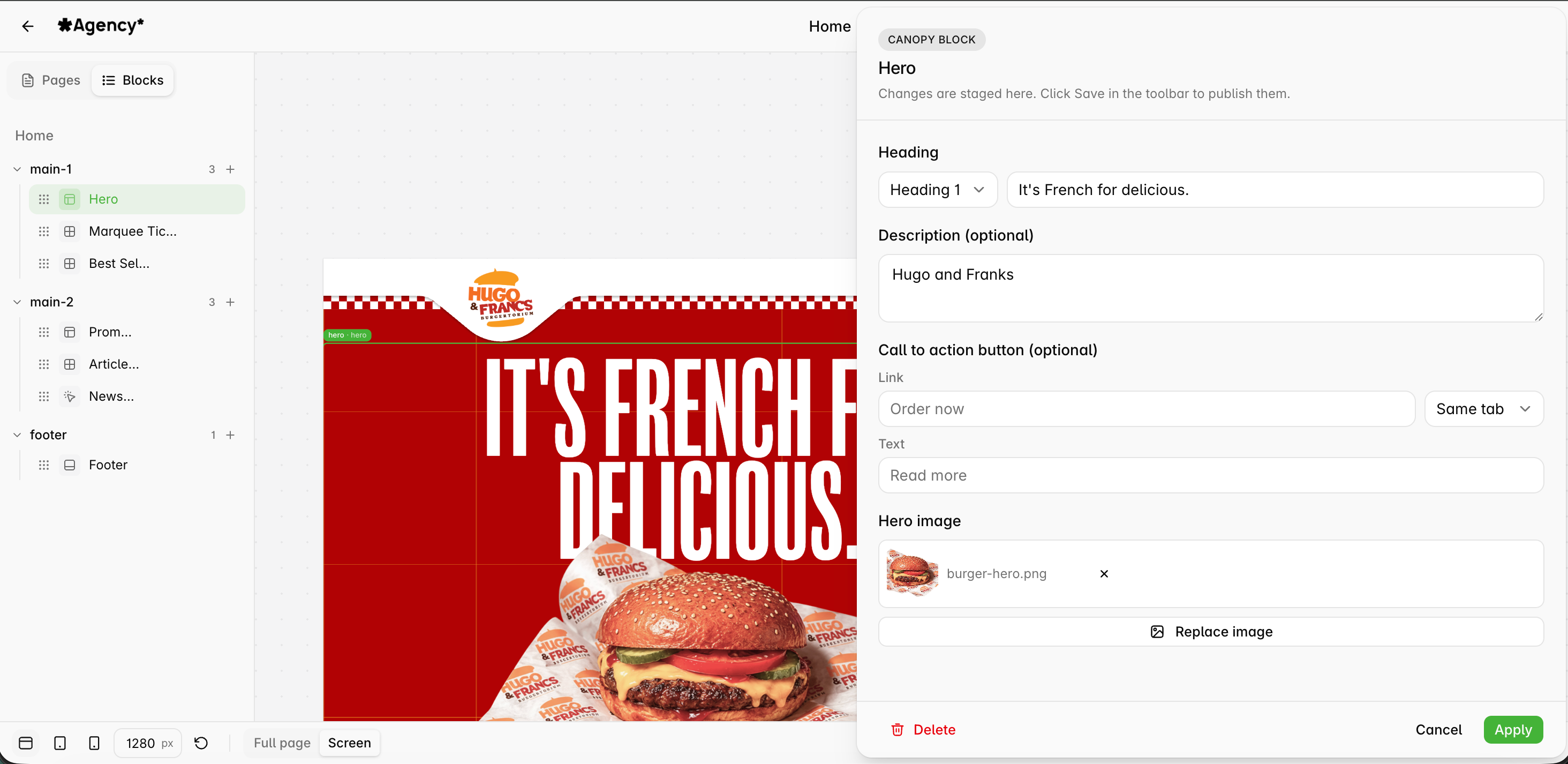
Blutui is built to give agencies the operational certainty required to confidently sell outcomes. It creates a systematic, repeatable and predictable digital production environment that allows agencies to move away from reinventing the wheel on every project and towards a proven delivery methodology.
The benefit is not simply that agencies can build faster. Speed is only the obvious outcome.
The bigger change is that agencies who already have creative confidence in abundance, gain in commercial confidence. They sell the big idea, the campaign, the strategy and the media mix and now, have the confidence to control where the audience lands and transacts, this creates a completely new value proposition for most agencies and their clients.
When an agency knows it can deliver complex digital experiences with a fraction of the traditional resources, in a fraction of the time and with complete creative accuracy, it can finally change the commercial conversation. Instead of defending hours, it can focus on outcomes. Instead of justifying effort, it can demonstrate impact. Instead of passing on the opportunity to capture the entire brief, they capture every available dollar that’s on the table.
This is where digital production becomes genuinely productisable. Agencies can package their design and build capability around proven methodologies, predictable delivery and repeatable commercial models rather than treating every engagement as a one-off project with unknown risk.
That predictability also opens the door to new commercial models. Performance-linked remuneration, shared upside arrangements and strategic partnerships become far more realistic when agencies have confidence that delivery costs and timelines are controlled.
Historically, agencies have been forced to monetise the work after it was delivered because the cost and complexity of delivery created too much uncertainty. Blutui changes that equation by turning digital production from a variable service into a predictable capability.
Artificial intelligence will undoubtedly make agencies faster. But speed alone does not solve the commercial challenge facing Adland.
Confidence does.
The agencies that succeed will be the ones that stop selling the effort required to produce the work and start confidently demonstrating the value that work creates.
Because after 30 years in this industry, the lesson is pretty clear.
The biggest opportunity for agencies is not how to create more value, it is to capture plenty of it for themselves.



Sign up for our newsletter.
We partner with some extraordinary organisations