Published December 16, 2025
Schemas the New SEO
How Agentic AI Increasingly Determines How Brands Get Found
For the last two decades, agencies have trained their clients to obsess over SEO.
Keywords. Metadata. Page structure. Backlinks. Content cadence.
All in service of one thing, being discoverable by a search engine that ranks pages and sends warm-blooded humans to click them and hopefully buy something.
While that model isn’t dead and gone, it’s being eroded by the new kid on the block, agentic search.
We are moving into a world of agentic AI, where software agents search, decide, compare, transact, and act on behalf of people. Not just chatbots answering questions, but systems that actively complete tasks. Book a trip. Shortlist vendors. Compare insurance policies. Select suppliers. Trigger workflows.
In that world, discoverability does not look like ten blue links. It looks like schemas.
What Schemas Actually Mean in an Agentic World
Schemas are structured ways of describing what something is, how it behaves, what inputs it accepts, and what outputs it produces.
For humans, a website explains a product.
For agents, a schema defines it.
An agent does not want marketing copy. It wants clarity.
What is this thing?
What problem does it solve?
What are the constraints?
What data does it require?
What happens if I choose it?
If that information is ambiguous, inconsistent, or locked inside unstructured content, the agent moves on.
This is the uncomfortable truth: in agentic search, persuasion matters less than legibility.
Agentic Search Is Not SEO 2.0
Most brands are still framing AI discovery as a continuation of SEO, which is a mistake.
Traditional SEO optimises for ranking.
Agentic search optimises for selection.
Agents do not browse. They filter.
They do not skim. They parse.
They do not infer intent from poetic language. They follow rules.
If your brand cannot be cleanly represented as a structured option in an agent’s decision set, you are invisible, regardless of how beautiful your website is.
This is why agencies should be pushing clients now, not later, to think about how their offerings are described at a machine level.
Why Agencies Have a Strategic Window Right Now
Most clients are not thinking about this.
Most competitors are not building for it.
That is exactly why agencies should.
Schemas force uncomfortable but valuable conversations:
What exactly do we sell?
What is standard vs configurable?
What are the trade-offs?
What data proves value?
What does success look like in measurable terms?
These are not technical questions. They are business clarity questions.
Agencies that can help clients translate messy offerings into structured, agent-readable definitions will shape how those brands show up in AI-mediated decisions for years.
This is the same advantage early SEO agencies had when clients did not yet understand search.
Where Blutui Sees This Heading
At Blutui, we spend our time inside the messy middle of agency delivery. Scopes, components, workflows, assumptions, dependencies.
What becomes obvious very quickly is this: agentic systems only work when the underlying structure exists.
No schema, no automation.
No structure, no scale.
The agencies that win in an agentic future will be the ones who already think in systems, not just stories.
Creative still matters. Strategy still matters. Brand still matters.
But if your brand cannot be cleanly understood by an agent acting on your customer’s behalf, it may not even make the shortlist.
The Provocation for Agencies
Start treating schemas with the same seriousness you once treated SEO.
Not as a technical add-on.
Not as a developer problem.
But as a core part of how brands are positioned for discovery, selection, and action.
Because the next generation of search will not ask “Which page ranks first?”
It will ask “Which option can I confidently choose right now?”
And agents will only choose what they can clearly understand.
We hope you’ve found this helpful, essentially think of your audience as now split between human search and robotic search.
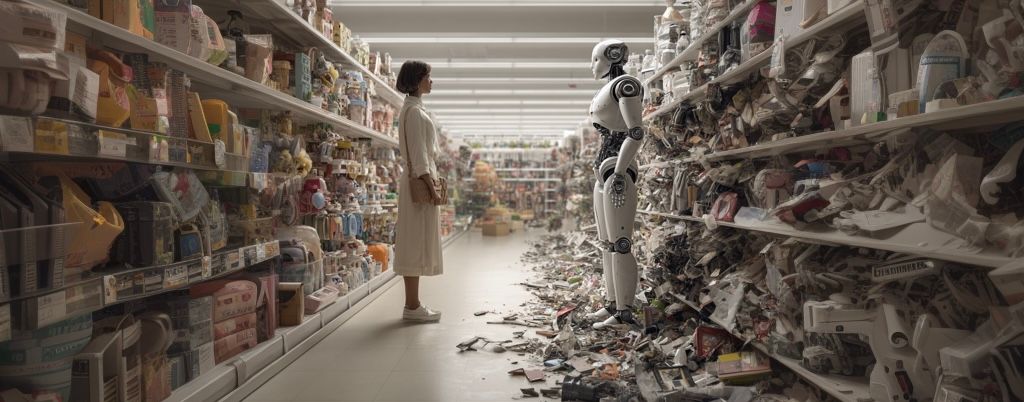
The humans still love a good story, a beautiful sunrise, a well crafted font, they love to browse the products in the supermarket aisle. Robots couldn’t care less and will trash the aisle to get to the answer in a nanosecond. Robots, agenctic search simply want the facts explained in order to check the box and rank your site as an option against what it’s been asked for by a human, or another agent.
Now your clients need to consider both strategies to have a shot at a sale.



Sign up for our newsletter.
We partner with some extraordinary organisations